
Theme: Accelerating the Achievement of Gender Equality and the Empowerment of All Women and Girls in the Context of the 2030 Agenda for Sustainable Development
Review Theme: Achieving Gender Equality and the Empowerment of All Women and Girls in the Context of Climate Change, Environmental and Disaster Risk Reduction Policies and Programmes
Critical Area of Concern: Poverty and the Economic Empowerment of Women
Submitted by: Heal The Planet Global Organisation (HTP), in Special Consultative Status with the United Nations
Session Dates: 8–19 March 2027
Venue: United Nations Headquarters, New York, United States of America
1. Introduction
Heal The Planet Global Organisation (HTP), a non-governmental organisation in Special Consultative Status with the United Nations, respectfully submits this written statement to the seventy-first session of the Commission on the Status of Women (CSW71). HTP calls upon governments, United Nations agencies, development partners, the private sector and civil society to strengthen collective action towards achieving gender equality, empowering women and girls, eradicating poverty and building environmentally sustainable and disaster-resilient communities.
Gender equality is a fundamental human right and an essential foundation for sustainable development, peace, social justice and economic prosperity. Nevertheless, millions of women and girls continue to experience poverty, discrimination, limited access to education and healthcare, unequal economic opportunities, gender-based violence and exclusion from decision-making processes.
These challenges are interconnected and are often intensified by climate change, environmental degradation, natural disasters, conflict, displacement and humanitarian emergencies. Women and girls in rural communities, informal settlements and refugee-hosting areas frequently face additional barriers to accessing productive resources, employment, financial services and social protection.
As the international community approaches the 2030 deadline for the Sustainable Development Goals (SDGs), HTP urges all stakeholders to move beyond commitments towards measurable, adequately financed and inclusive action that improves the lives of women and girls.
2. Accelerating Gender Equality and the Achievement of the 2030 Agenda
HTP recognises that the empowerment of women and girls is indispensable to achieving the Sustainable Development Goals, particularly SDG 1 on ending poverty, SDG 2 on ending hunger, SDG 4 on quality education, SDG 5 on gender equality, SDG 8 on decent work and economic growth, SDG 10 on reducing inequalities and SDG 13 on climate action.
Achieving these goals requires addressing structural barriers that prevent women and girls from fully participating in economic, political, social and environmental development.
Women contribute significantly to agriculture, trade, entrepreneurship, education, healthcare, community development and unpaid care work. However, their contributions are frequently undervalued, while many continue to face unequal access to land ownership, inheritance, credit, technology, vocational training and leadership opportunities.
HTP calls upon governments to strengthen the implementation and enforcement of laws and policies that protect women’s rights, eliminate discrimination and promote equal opportunities. National development plans and public budgets should incorporate gender-responsive targets, dedicated resources and transparent monitoring mechanisms.
Women and girls must also be meaningfully represented in public institutions, local councils, peacebuilding initiatives, development planning and environmental governance.
HTP further urges governments to invest in girls’ education, particularly in underserved communities, and to address barriers such as school-related costs, early and forced marriage, teenage pregnancy, inadequate sanitation facilities and gender-based violence. Every girl should have the opportunity to complete her education, develop her talents and participate fully in society.
3. Poverty Eradication and the Economic Empowerment of Women
HTP identifies women’s poverty and economic exclusion as major obstacles to sustainable development. Economic empowerment must be recognised not merely as a strategy for increasing household income, but as a means of strengthening women’s independence, dignity, decision-making power and ability to contribute to their communities.
Women in low-income households often carry a disproportionate responsibility for feeding families, caring for children and older persons, obtaining water and fuel, and supporting relatives affected by illness or disability. These responsibilities can limit their opportunities to pursue education, paid employment and business development.
HTP therefore calls for comprehensive economic empowerment programmes that enable women to access productive resources and build sustainable livelihoods.
Governments, financial institutions and development partners should expand access to affordable credit, savings schemes, business development services, financial literacy and entrepreneurship training. Particular attention should be given to women-led micro, small and medium-sized enterprises, agricultural cooperatives, informal-sector workers and women living in poverty.
Land ownership and secure tenure are also essential. Women farmers and entrepreneurs should enjoy equal rights to own, inherit, use and control land and other productive assets, in accordance with applicable national laws and international human rights obligations.
Furthermore, governments should strengthen social protection programmes for vulnerable women, including female-headed households, older women, women with disabilities, widows, single mothers and women affected by displacement.
HTP recommends the establishment and expansion of community-based economic empowerment initiatives that combine vocational skills, access to markets, digital literacy, mentoring and financial services. Such programmes should be designed with women’s participation and should respond to local economic conditions.
Equal pay for work of equal value, safe working environments, maternity protection, decent working conditions and the recognition and redistribution of unpaid care work must remain central priorities.
4. Gender Equality, Climate Change and Environmental Sustainability
HTP recognises that climate change is not only an environmental challenge but also a development and gender equality concern. Droughts, floods, extreme heat, changing rainfall patterns, food insecurity and environmental degradation can undermine women’s livelihoods, increase unpaid care responsibilities and expose vulnerable households to deeper poverty.
In many communities, women play important roles in food production, water collection, household energy management and natural resource conservation. When environmental conditions deteriorate, women and girls may spend more time securing water, fuel and food, leaving less time for education, income-generating activities and community participation.
HTP calls for gender-responsive climate policies that recognise women as leaders, innovators and decision-makers rather than treating them solely as vulnerable beneficiaries.
Governments should ensure that women participate meaningfully in climate adaptation planning, disaster preparedness, environmental conservation and the development of national climate strategies.
HTP recommends expanding women’s access to climate finance, agricultural extension services, climate information, drought-resistant crops, irrigation technologies, sustainable farming practices and renewable energy solutions.
Clean cooking technologies and affordable renewable energy are particularly important. Investment in clean cooking can reduce dependence on traditional biomass, lessen household air pollution, reduce the time spent collecting fuel and create opportunities for women to participate in green enterprises.
Women should be supported to establish and manage businesses involving solar energy, clean cooking equipment, recycling, sustainable agriculture, tree planting and other environmentally responsible economic activities.
International climate finance mechanisms and national environmental programmes should incorporate gender-responsive budgeting and ensure that women-led organisations and grassroots initiatives can access funding through transparent and practical procedures.
5. Women, Disaster Risk Reduction and Humanitarian Resilience
Disasters frequently deepen existing inequalities. Women and girls affected by floods, droughts, displacement and other emergencies may experience loss of livelihoods, food insecurity, interrupted education, inadequate healthcare and heightened risks of exploitation and gender-based violence.
Women with disabilities, older women, pregnant women, refugee women and female-headed households may face additional barriers to accessing emergency assistance and recovery services.
HTP urges governments and humanitarian partners to integrate gender equality into every stage of disaster risk reduction, including risk assessment, preparedness, emergency response, recovery and reconstruction.
Early-warning systems should be accessible to women and girls, including those with disabilities and those living in remote areas. Emergency shelters must provide appropriate sanitation, privacy, safety, menstrual hygiene supplies and access to essential health services.
Humanitarian assistance should also include livelihood recovery, vocational training, cash assistance where appropriate, agricultural support and access to financial services. Such interventions can help women recover from emergencies while reducing long-term dependency on humanitarian aid.
HTP further recommends that women-led community organisations be included in local disaster management committees and humanitarian coordination structures. Their knowledge of household needs, community networks and local coping mechanisms can strengthen the relevance and effectiveness of emergency interventions.
In refugee-hosting communities, development and humanitarian partners should support both displaced women and vulnerable women in host communities through livelihood programmes, education, healthcare and protection services.
6. Education, Health and Protection of Women and Girls
Education and healthcare are essential foundations for women’s empowerment. Girls who have access to quality education and women who can obtain affordable healthcare are better positioned to make informed decisions, secure employment and contribute to economic development.
HTP calls for increased investment in universal access to quality education, including science, technology, engineering and mathematics, digital skills, vocational training and entrepreneurship education for girls and young women.
Governments should strengthen access to comprehensive, age-appropriate health education, maternal healthcare, reproductive health services, nutrition and psychosocial support, consistent with applicable human rights obligations and national laws.
Ending all forms of violence against women and girls must remain an urgent priority. Domestic violence, sexual exploitation, trafficking, child marriage, harmful practices and workplace harassment undermine women’s safety, education and economic participation.
HTP urges governments to strengthen prevention programmes, survivor-centred support services, access to justice and accountability for perpetrators. Community leaders, religious institutions, schools, families and civil society organisations should be engaged in challenging discriminatory attitudes and promoting respect, equality and the dignity of every woman and girl.
Men and boys must also be engaged as partners in advancing gender equality, sharing care responsibilities and preventing violence.
7. Digital Inclusion and Women’s Leadership
Digital technology can expand women’s access to education, employment, markets, financial services and civic participation. However, affordability, limited digital literacy, inadequate infrastructure and online harassment continue to exclude many women and girls.
HTP recommends investment in affordable internet access, digital literacy programmes, technology training and safe online environments, especially for rural women, young women, women with disabilities and women-led enterprises.
Governments and technology companies should strengthen protections against online harassment, cyberviolence, fraud and discriminatory practices while promoting responsible and inclusive technological innovation.
Women’s leadership must also be strengthened in public administration, business, academia, environmental governance and community development. Women should have meaningful opportunities to influence the decisions, budgets and policies that affect their lives.
8. Recommendations to Governments, the United Nations and Development Partners
Heal The Planet Global Organisation respectfully recommends the following actions:
- Strengthen gender-responsive governance: Integrate measurable gender equality targets into national development plans, public budgets and SDG implementation strategies.
- Finance women’s economic empowerment: Expand affordable financing, entrepreneurship support, market access and vocational training for women-led businesses and cooperatives.
- Advance equal rights to productive resources: Protect women’s rights to land, inheritance, property ownership, decent work and equal economic opportunities.
- Invest in climate-resilient livelihoods: Support women farmers and entrepreneurs through climate-smart agriculture, renewable energy, clean cooking and environmental conservation initiatives.
- Integrate gender into disaster risk reduction: Ensure that women participate in disaster planning and have equitable access to early-warning systems, emergency assistance and recovery resources.
- Expand education and healthcare: Address barriers that prevent girls from completing school and women from accessing essential health and social services.
- Strengthen social protection: Provide accessible support for women experiencing poverty, disability, displacement, old age, unemployment and other forms of vulnerability.
- Prevent violence and discrimination: Strengthen legal protections, survivor-centred services, public education and accountability mechanisms.
- Support grassroots women’s organisations: Provide accessible funding, technical assistance and meaningful participation in policymaking and programme implementation.
- Improve accountability and data collection: Collect and publish reliable, sex-, age- and disability-disaggregated data to measure progress and identify gaps in gender equality and economic empowerment.
- Promote women’s participation in leadership: Ensure women’s meaningful representation in political, economic, environmental and humanitarian decision-making.
- Strengthen partnerships: Encourage cooperation among governments, United Nations agencies, civil society, philanthropic organisations, academia and the private sector to scale up effective, evidence-based interventions.
9. Conclusion
Heal The Planet Global Organisation believes that a sustainable and peaceful world cannot be achieved while women and girls remain disproportionately affected by poverty, discrimination, environmental degradation and exclusion from decision-making.
The CSW71 session presents an important opportunity for the international community to renew its commitment to gender equality and accelerate progress towards the 2030 Agenda for Sustainable Development.
HTP calls upon all stakeholders to transform international commitments into practical action by investing in women’s economic independence, protecting the rights of girls, strengthening climate resilience, preventing gender-based violence and ensuring that women have equal opportunities to lead and prosper.
Women must be recognised not only as beneficiaries of development but also as essential partners, innovators and leaders in building resilient economies and sustainable communities.
Heal The Planet Global Organisation stands ready to promote collaboration, community engagement, environmental sustainability and inclusive development in pursuit of a world where every woman and girl can live in dignity, enjoy equal rights, realise her full potential and contribute meaningfully to the wellbeing of humanity.
Submitted by:
Dr. Kivumbi Earnest Benjamin, L.H.D. (Hon.)
President
Heal The Planet Global Organisation (HTP)
In Special Consultative Status with the United Nations
Namasuba Hill, off Entebbe Road, Kampala, Uganda
Email: kivumbi@healdeplanet.org
Website: www.healdeplanet.org
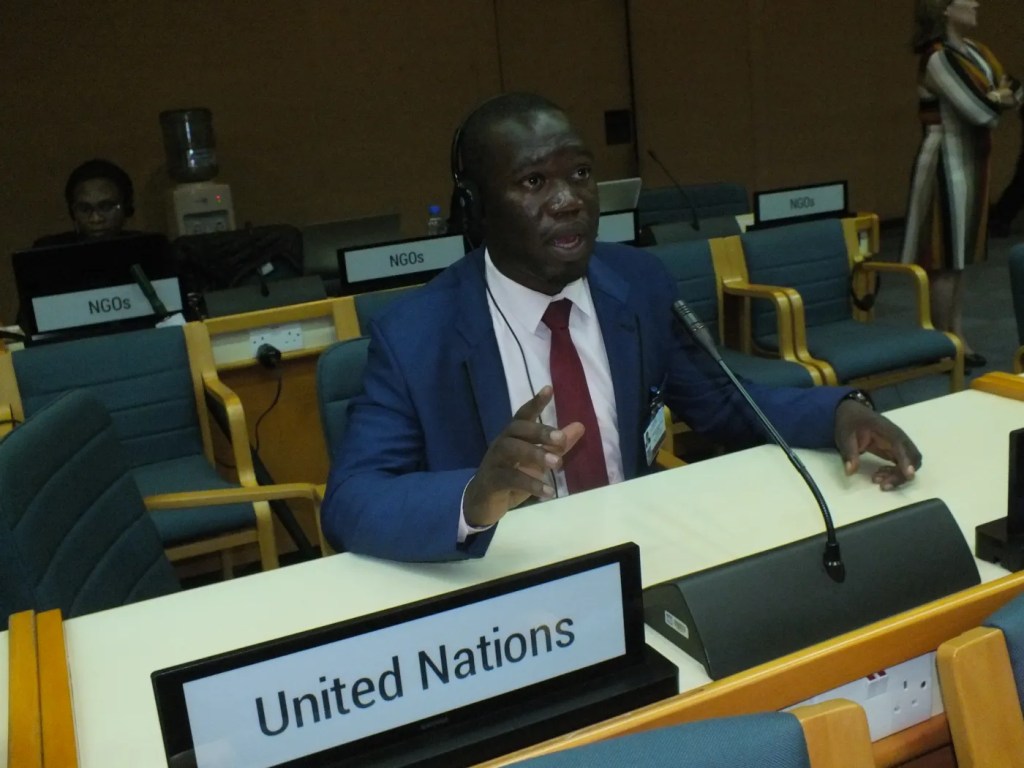
HTP President Dr. Kivumbi Earnest Benjamin, L.H.D (Hon) at United Nations

